
A ductless mini split system is the most practical cooling and heating upgrade available to Queens homeowners — particularly in homes, apartments, and co-ops where running new ductwork is either structurally impossible or financially unreasonable.
Forest Hills HVAC & Air Conditioning installs ductless mini split systems throughout Forest Hills and Queens, NY. Every system is sized correctly for your home's layout and Queens' actual climate — including winter. Every installation is fully permitted, completed by NYC-licensed technicians, and backed by a written flat-rate price you approve before we order a single component.
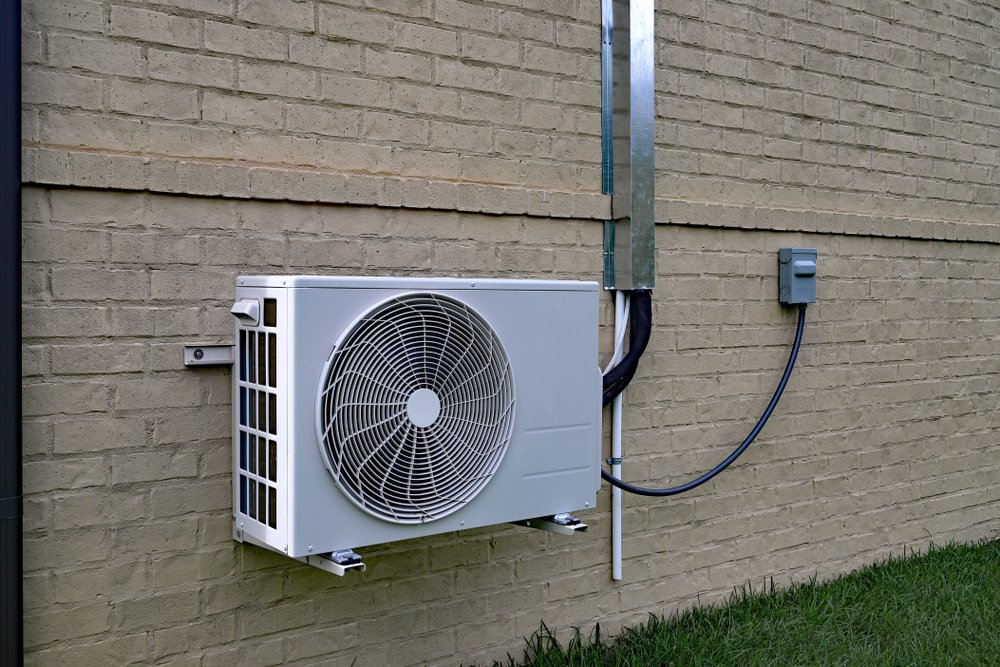
A ductless mini split has two components: an outdoor compressor and one or more indoor air handlers. A small conduit connects them through a three-inch hole in the wall. No ductwork. No major construction.
Each indoor unit operates independently. You set the bedroom to 68°F and the living room to 72°F at the same time. You turn off the unit in an empty room entirely. That zone-by-zone control is what makes mini splits genuinely different from central air — not a marketing claim, a mechanical reality.
Modern mini splits are heat pumps — they cool in summer and heat in winter using the same system running in reverse. A correctly specified hyper-heat model maintains full heating capacity at -13°F outdoor temperature. This is not a backup heat source. For many households it replaces the furnace entirely.
One system. Year-round comfort. Energy efficiency that window units and baseboard heat cannot match.
We answer this honestly before recommending anything. A mini split is the right solution in most cases — but not every case — and the honest answer depends on your specific home.
Your home has no existing ductwork and adding it would require opening ceilings, walls, or floors. In homes built before central air was standard — which describes a significant portion of the Queens housing stock — duct installation is a major construction project. A mini split delivers central-level comfort through a three-inch wall penetration.
You want room-by-room temperature control. Households where different family members prefer different temperatures, or where one room consistently runs hotter or colder than the rest of the home, benefit significantly from independent zone control.
You are adding a room, finishing a basement, or converting an attic. Extending existing ductwork to a new space is frequently more expensive and disruptive than a standalone mini split installation.
You want to reduce energy costs. Mini splits operate at efficiency ratings (SEER2) that conventional ducted systems cannot match — partly because they eliminate the energy loss that occurs in ductwork, which can account for 20–30% of a conventional system's total energy consumption.
You want one system that handles both heating and cooling. A hyper-heat mini split eliminates the need for a separate cooling system entirely — no window units, no separate furnace for rooms without radiators.
You already have functional ductwork in good condition throughout the home and your primary need is a new central unit. You are conditioning a very large open-plan space where multiple indoor units would be needed to cover one zone effectively. We tell you this honestly at the consultation — a mini split is not the right answer for every situation.
Different properties require different system configurations depending on layout and cooling demand.
One outdoor compressor connected to one indoor unit. This is the right configuration when you need to condition a single room, addition, or open-plan space. Most single-zone installations in Queens are completed in one day.
One outdoor compressor connected to two, three, four, or more indoor units — each in a different room or zone. Each indoor unit operates independently. This is how a mini split replaces whole-home HVAC — the outdoor unit handles the refrigerant load for every zone simultaneously while each room maintains its own temperature setting. Multi-zone installations typically take one to two days depending on the number of indoor units and the routing complexity.
Every competitor will tell you the brand they prefer. We will tell you the sizing variable that determines whether your system actually performs.
Cooling load calculation. The correct indoor unit size — measured in BTU — is determined by the room's square footage, ceiling height, insulation, sun exposure, and window area. A room that receives afternoon western sun requires more cooling capacity than an identical north-facing room. Undersizing means the unit runs at maximum capacity all day and never reaches the set temperature. Oversizing means it cools the room in minutes, shuts off, allows humidity to build, and cycles back on — creating the clammy, inconsistent comfort that makes people think mini splits "don't work."
Sizing for Queens winters. This is the variable most installers skip. In Queens, January outdoor temperatures average 27–32°F with periods well below that. A mini split's heating capacity degrades as outdoor temperature drops — a standard heat pump rated at 24,000 BTU at 47°F may deliver only 16,000 BTU at 17°F. Hyper-heat models (Mitsubishi H2i, Daikin Quaternity, Fujitsu AOU series) maintain rated capacity at much lower temperatures. If you intend to use the system for primary heating, it must be specified for worst-case winter conditions — not average annual temperatures. We size for January, not for September.
Outdoor unit placement. The outdoor compressor needs adequate airflow clearance and must not discharge into a confined space. In Queens co-ops and attached homes, this requires planning around building rules, neighbor proximity, and local code requirements. Poor placement reduces efficiency and can cause the unit to ice up in winter, triggering defrost cycles that interrupt heating at exactly the wrong time.
We install all major manufacturers and recommend based on your home's configuration and performance requirements — not installer incentives.
Mitsubishi Electric — The industry benchmark for cold-climate performance. The Hyper Heat (H2i) series maintains rated heating capacity at -13°F outdoor temperature, making it the strongest choice for Queens homes that need primary heating from a mini split. Mitsubishi also leads on quiet operation — indoor units as low as 19dB, quieter than a whisper.
Daikin — Excellent build quality and the Daikin ONE+ smart thermostat integration is the best in class for households that want full smart home control. The Aurora series cold-climate models perform reliably down to -13°F.
Fujitsu — The Halcyon and AOU series are strong performers in cold climates and offer some of the most compact indoor unit profiles available — a practical advantage in rooms with limited wall space. Consistently reliable in multi-zone configurations.
LG — The Art Cool and LGRED° series offer strong aesthetic options for homeowners who want the indoor unit to be less visually prominent. LGRED° maintains full heating capacity at -13°F outdoor temperature.
Samsung — The Wind-Free series delivers cooling by dispersing air through 23,000 micro holes rather than a direct airstream — eliminating the cold draft that some occupants find uncomfortable with conventional mini split indoor units. A strong choice for bedrooms and home offices.
We are not a dealer or preferred installer for any single brand. When we recommend a brand and model, it is because that unit is the correct specification for your home — not because of incentive structures.
One written price. Everything below included. No additions after the job opens.
On-site assessment and load calculation
System recommendation in writing
NYC permit and DOB inspection
Full system commissioning and testing
Most competitors either refuse to publish pricing or give ranges so wide they are useless. Here is what you actually need to budget:
Single-zone installation (one outdoor unit, one indoor unit): $3,000 to $5,500 fully installed, depending on brand, BTU capacity, and installation complexity. A straightforward bedroom installation at the lower end of that range. A large open-plan living area or a cold-climate hyper-heat specification at the higher end.
Multi-zone installation (one outdoor unit, multiple indoor units): $5,500 to $14,000+ depending on the number of zones, total system BTU, brand, and line set routing complexity. A two-zone system in a smaller Queens home runs $5,500 to $8,000. A four-zone whole-home system in a larger property runs $10,000 to $14,000.
What drives cost beyond the base system: electrical panel upgrade if the existing panel cannot support the new load (common in older Queens homes — $800 to $2,000), line set routing through finished walls or long runs ($300 to $800 per additional 10 feet of complexity), and multi-story routing where the outdoor unit is on a different floor from indoor units.
All of this is identified during the on-site assessment and included in your written quote. The number you approve is the number on your invoice.
In addition to Forest Hills, we provide AC services throughout nearby neighborhoods in Queens.
You can explore nearby locations here:
A mini split system uses indoor air handlers connected to an outdoor unit to cool or heat specific areas without ductwork.
Yes, modern mini split systems are designed for high energy efficiency and zoned temperature control.
Many ductless systems provide both cooling and heating functions.
Yes, they are often ideal for older homes without existing ductwork.
Most installations can be completed within one day depending on the system size and layout.
Yes, multi-zone systems can cool and heat several rooms independently.
Yes, routine cleaning and inspections help maintain efficiency and long-term performance.
We also serve nearby areas including Jackson Heights, Flushing, Middle Village, Jamaica, and other parts of Queens.
Installing a ductless mini split system can improve indoor comfort, energy efficiency, and cooling flexibility for homes and businesses throughout Queens.
We provide ductless mini split installation services throughout Forest Hills and nearby neighborhoods for residential and commercial properties.
Contact us today to schedule your mini split installation consultation.
Location
We proudly provide expert HVAC, plumbing, and air conditioning services across Queens, NY. View our official Google Business Profile.